Mossley Hill Vicarage is set to become the first fully decarbonised clergy home in the Diocese of Liverpool, marking a significant step forward in both the Diocese of Liverpool’s and the Church of England’s journey towards net zero carbon.
The project has been made possible through a national Nett Zero demonstrator grant, awarded to explore how clergy housing can be made more energy efficient, affordable to run and environmentally sustainable. The aim is to help preserve our environment and buildings for generations to come, supporting worship within an eco-conscious community.
Work on the vicarage began in May 2025 and is due to complete in May 2026. To date, it has been retrofitted with an air source heat pump, solar panels, battery storage, upgraded radiators and double glazing.
Following the works, the vicarage will be fully decarbonised, eliminating around 33,500 kWh of fossil fuel energy use each year and operating with zero operational carbon emissions. This represents a significant step towards the Diocese’s net zero ambitions. Energy bills are also expected to reduce by around 80%, delivering an estimated annual saving of £3,250. It is hoped that lessons from the project can be rolled out more widely across the Diocese.
Alongside transforming the vicarage, the grant is also supporting Mossley Hill Church as it begins planning the main church’s journey towards net zero, with the long term aim of achieving both a net zero church and vicarage and fully decarbonising emissions from both buildings. This reflects the Church of England’s fifth mark of mission: to care for creation.
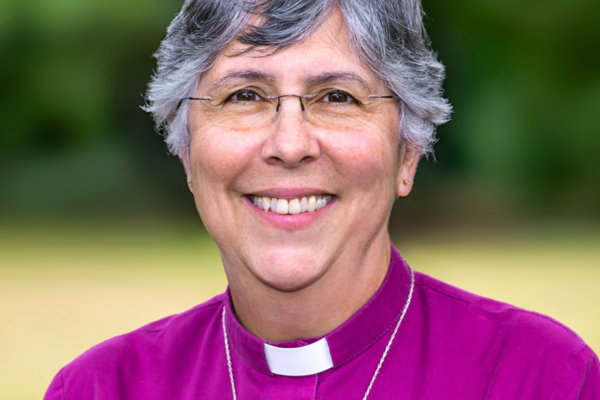
Revd Rachel Archer, Vicar at Mossley Hill Church, said:
“We are delighted to have been chosen. We know that becoming a net zero church by 2030 is a big challenge, and at times it can feel quite daunting. This grant gives us the opportunity to begin that journey with the right support, helping us understand what might be possible for our church, and we hope it will also help inform other churches and dioceses as they begin their own journeys.
“It also recognises that we cannot do this alone. As well as guiding us on the practical steps, we are being supported with advice on how we might raise the funds needed in the future, which is a real encouragement.”
The funding will help the church develop a clearer plan for the future.
Revd Rachel Archer added:
“We hope the grant will give us a roadmap for how to reach the national church’s ambitious net zero target, and to play our part in being good stewards of God’s creation.”
The project is already having an impact within the congregation, with growing interest in sustainability and the church’s environmental work.
“The congregation are delighted for us. We are currently looking to recruit more volunteers to join our small but dedicated Eco team, so we can bring sustainability and net zero to the forefront of church life,” she said.
As one of the Church of England’s demonstrator projects, Mossley Hill will also help build knowledge and experience for the Diocese of Liverpool and neighbouring dioceses such as Chester and Manchester, offering a practical example of how churches and clergy housing can move towards a lower carbon future.