
General Synod Elections 2026
Nominations for the General Synod elections 2026 are now closed.
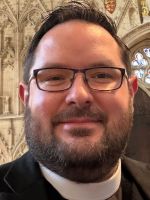
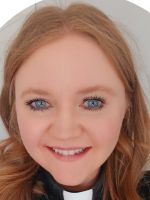
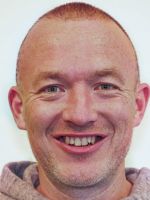
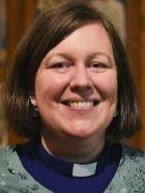
The full list of candidates, along with their election address and photograph, if they have chosen to submit them, can be accessed below.
In Liverpool Diocese, we have 4 House of Laity places to fill and 5 House of Clergy places to fill.
As we have received more valid nominations than places available, elections for both Houses are contested and the electorate are invited to cast their votes.
Voting will open for qualified electors on Monday 21st September 2026. Voting will close Monday 12th October for paper/postal ballots and Tuesday 13th October for ballots via the electronic portal.
Candidates for the House of Laity to the General Synod
Here is a list of candidates for the General Synod elections 2026. We are displaying an election address of every candidate who has provided one. Please click on the link to read their election statement and view their photographs.
Please note: Any statement, views or opinions expressed by any Candidate in their Candidate’s Election Address enclosed in this document do not necessarily represent those of Liverpool Diocesan Board of Finance nor of the Presiding Officer in the election.
Candidates for the House of Laity to the General Synod
| Candidate’s full name | Election Address | Nominator 1 | Nominator 2 |
| Mr Warren Bohan | View here | Victoria Ekpo | Susan (Sue) Mitchell |
| Mrs Nadine Samantha Daniel | View here | Mark Hedley | Jillian Moorland-Duff |
| Mr Richard Christopher Somer Denno | View here | Lynne Wilkinson | Verna Jolly |
| Mrs Jessica Howard | View here | Pamela Ambrose | Adrian Manson |
| Mrs Ruth Killen | View here | Vivian Purnell | Mark Winstanley |
| Mr Nigel Deane Lea-Wilson | View here | David Thorpe | Anne Ward |
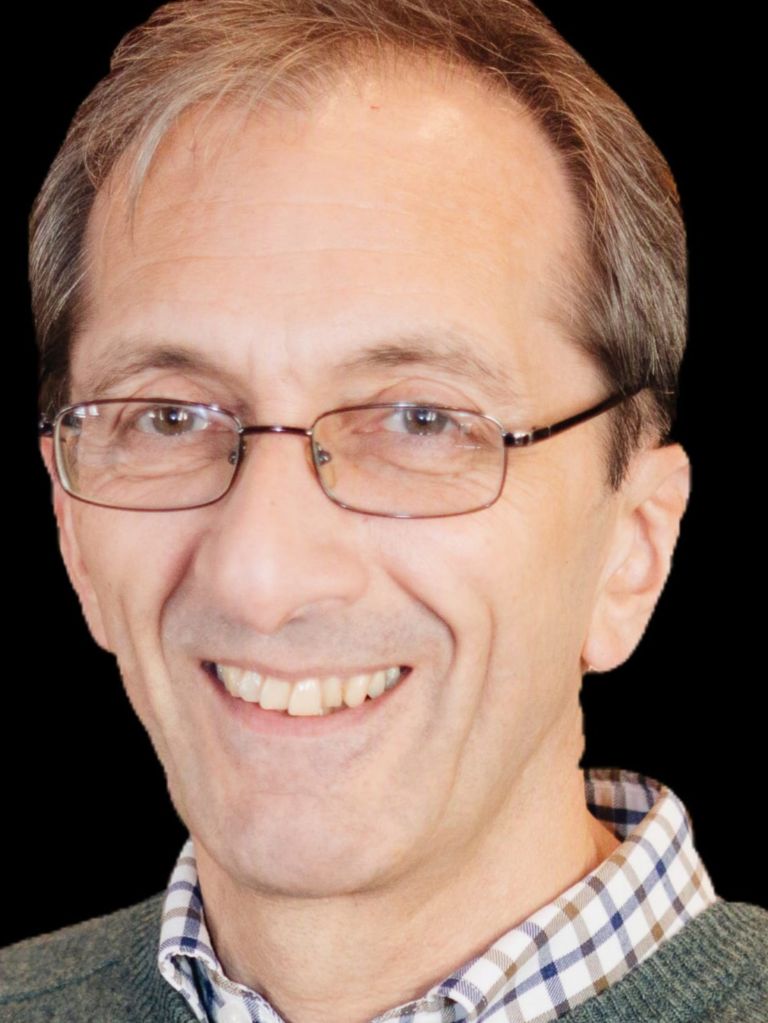
| Mr Tobias Threlfall-Holmes | View here | Susan (Sue) Say | Peter Dorling |
| Canon Pauline Debra Walker Commonly used name: Debra | View here | Geoffrey (Geoff) Almond | Jean Cropper |
| Mr Roekh Yousaf | View here | Richard Denno | Janet Gavin |








Candidates for the House of Clergy (Proctors in Convocation) to the General Synod
| Candidate’s full name | Election Address | Nominator 1 | Nominator 2 |
| The Revd Dr Philip Anderson | View here | The Revd Samantha (Sam) Nicholson | The Revd Dr Ellen Loudon |
| The Ven Simon Fisher | View here | The Revd Canon Nicola Milford | The Revd Canon Kate Wharton |
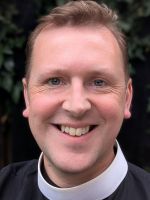
| The Revd Daniel Thomas Howard | View here | The Revd Michael (Mike) Hindley | The Revd Canon Nicola Milford |
| The Revd Nicholas Johnson | View here | The Revd Emma Williams | The Revd Canon Malcolm Rogers |
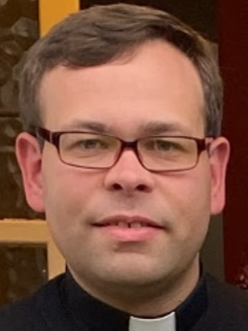
| The Revd Daniel Brian Leathers Commonly used name: Dan | View here | The Revd Timothy (Tim) Coates | The Revd Alexander (Alex) Rayment |
| The Revd Rebecca Mary Lloyd | View here | The Revd Paul Givens | The Revd Tabitha Prabhakara Rao |
| The Revd Kimberley Mannings Commonly used name: Kim | View here | The Revd Canon Malcolm Rogers | The Revd Rachel Shuttleworth |
| The Revd Jude Padfield | View here | The Revd Elliott Ireton | The Revd Philip Nott |
| The Revd Ravinder Sangra Commonly used name: Ravi | View here | The Ven Peter (Pete) Spiers | The Revd Eleanor Poppy (Poppy) Thorpe |
| The Ven Dr Miranda Threlfall-Holmes | View here | The Revd Rebecca (Becca) Cottrell | The Revd Louis Johnson |
| The Revd Canon Kate Elizabeth Wharton | View here | The Revd Philip Saltmarsh | The Revd Jonathan (Jonty) Forster |




General Synod is the national assembly of the Church of England, commonly referred to as the Church’s Parliament. Together with the Westminster Parliament, it is the only body in the land which is entitled to make national law for England. Synod considers and approves legislation affecting the whole of the Church of England, authorises new forms of worship, debates matters of religious and public interest, and approves the annual budget for the work of the Church at national level.
Members of General Synod are arranged into three Houses: the House of Bishops, the House of Clergy (all ordained members, excluding bishops), and the House of Laity, the lay (not ordained) members from every diocese of the Church of England. Members of the Houses of Clergy and Laity are elected by the clergy and lay members respectively of the Deanery Synods.
2026 General Synod election timetable for parishes
The next election to General Synod takes place in 2026. The full election timetable is published below.
In the Diocese of Liverpool, we will elect 4 representatives for the House of Laity and 5 representatives for the House of Clergy.
2026 election timetable
14 July 2026
Deadline for qualifying as an elector (for most members); Synod dissolved and election period begins
27 July 2026
Register of electors sent to the Presiding Officer
14 August 2026
Invitations to nominate issued
7 September 2026
Nominations close at 5pm
21 September 2026
If poll needed, invitations to vote issued
13 October 2026
Voting ends
(Postal vote deadline 12 October 2026)
14-16 October 2026
Counting takes place
19 October 2026
Results declared
Queries: elections@liverpool.anglican.org
Hustings
As advertised hustings will be held in separate Houses and details will be published here shortly.
Voting
The lay Deanery Synod members in our diocese vote for lay candidates, and the clergy in our diocese vote for clergy candidates. The voting period is 21st September to 13th October 2026 (postal voting deadline is 12th October 2026)
In our diocese, we can elect 5 members of clergy and 4 members of laity to General Synod.
Voting will open for qualified electors on Monday 21st September 2026. Voting will close Monday 12th October for paper/postal ballots and Tuesday 13th October for ballots via the electronic portal. Voting details have been sent by email (or by post if no email provided) to all qualified electors. If you have not been contacted and believe you should have been, please contact elections@liverpool.anglican.org
Results
Candidates will be invited to observe the Count with details sent directly to each candidate in due course. Results will be declared by 19th October 2026 and published no later than that date.
If elected, you would come to General Synod for the first time at its meeting in London this November.
FAQs
This is a live list of frequently asked questions – we will continue to update this as the process evolves.
If you are interested in standing for election, please use the national eligibility checker as a guide. Any queries please contact elections@liverpool.anglican.org. You will need to fill out the diocese’s nomination form and have it signed by the people who are nominating you.
If you are standing as a lay member, you need two people who are members of a Deanery Synod to nominate you. If you are clergy, you need two other clergy to nominate you.
Those wishing to stand for election may wish to know that Synod members will be reimbursed for travel, accommodation and subsistence expenses for meetings held in London, and travel for meetings held in York (as the diocese will be billed directly for your accommodation and meals). If you are not able to pay up front for these things, we will work with you to ensure this is not a barrier to you serving on General Synod.
Potential candidates may also wish to know that the 2025/26 rate of compensation set by the Archbishops’ Council for loss of earnings due to attendance at General Synod or at meetings of the Synod’s or Council’s subordinate bodies is the actual loss up to £210 per day of absence.
- The frequency and length of meetings of the full General Synod follow a regular pattern of two (or occasionally three) meetings in a calendar year.
- Meetings are in February, July and (if needed) November. February and November meetings are non-residential and are held at Church House, Westminster. July meetings are residential and are held at the University of York.
- Members will wish to set aside time to read before meetings begin sufficient time to read the relevant papers.
- The weeks in which the meetings are held each year are fixed by a Synod resolution passed no later than the July meeting of the previous year. The Business Committee of the General Synod then informs Synod members in the agenda for each meeting of the precise dates (within the pre-arranged weeks) on which the Synod will meet, in the light of the needs of the agenda.
- A February meeting usually spans up to five weekdays and the daily sitting hours usually run from 9.00 a.m. to 12.30 p.m. and from 2.00 to 7.00 p.m.
- In York, residential meetings are usually held over a weekend from Friday afternoon to Tuesday afternoon. The Synod does not transact business on the Sunday morning during a weekend residential meeting. Instead, by invitation of the Dean and Chapter, members can attend a Sung Eucharist in York Minster.
- The dates so far agreed for Synod meetings in 2026-2031 are—
2026
Monday 16th November – Wednesday 18th November
2027
Monday 15th February – Friday 19th February
Friday 9th July – Tuesday 13th July
Monday 15th November – Wednesday 17th November (if required)
2028
Monday 14th February – Tuesday 22nd February
Friday 7th July – Tuesday 11th July
Monday 20th November – Wednesday 22nd November (if required)
2029
Monday 19th February – Tuesday 27th February
Friday 6th July – Tuesday 10th July
Monday 19th November – Wednesday 21st November (if required).
- It is preferred that members attend Synod meetings in person. However, if circumstances prevent this, members can participate remotely by Zoom.
- Members are not required to record their attendance at any full meeting and do not have to attend a minimum number of meetings. It rests with each individual to do the best they can in the light of other commitments and particular concerns in each Synod agenda. The Business Committee does, however, try as far as possible to help members by ensuring that particular items of business begin at published times.
- Members may be invited by the Appointments Committee to serve on permanent or temporary bodies but are entirely free to refuse. Individual members’ preferences are carefully taken into account in fixing dates of committee meetings and every effort is made by the Appointments Committee to share out the committee work fairly among members who are qualified to deal with the tasks to be undertaken.
- The Synod calls the sittings in Full Synod on one day a “session” and any number of sessions on consecutive days a “group of sessions”. But this is only a matter of terminology and has no bearing on the frequency or length of sessions.
General Synod representatives 2021-2026
Representation on the Church of England General Synod is based on the size of the diocese. We currently have five representatives for the House of Clergy and the House of Laity. In addition, the Bishop of Liverpool sits by right in the House of Bishops.
House of Laity
- Mr Gabriel Chiu
- Mrs Nadine Daniel
- Mr Richard Denno
- Mr Nigel Lea-Wilson
- Canon Debra Walker
House of Clergy
- Rev Dan Leathers
- The Venerable Pete Spiers
- Rev Martin Thorpe
- The Venerable Dr Miranda Threlfall-Holmes
- Rev Kate Wharton